
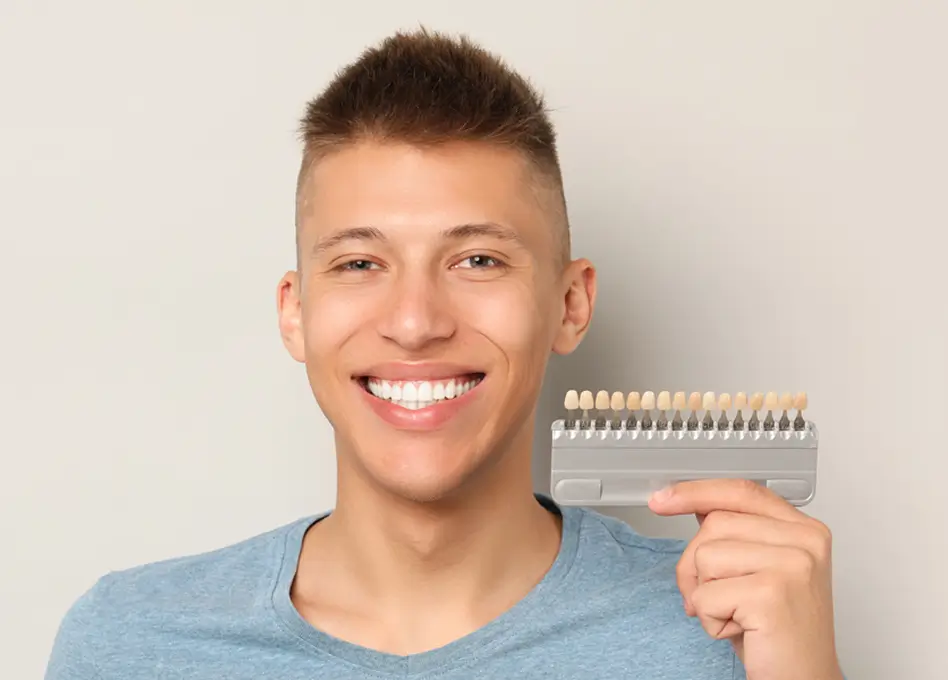
OFFER: Complimentary Veneer Virtual Smile Consult
COSMETIC DENTISTRY · PLANO, TX
Chips, gaps, and stubborn discoloration don’t need a whole new mouth — they need a precisely designed one. Our veneer process is built appointment by appointment, so what you approve in the design phase is exactly what you wear home.
What Is a Dental Veneer?
A dental veneer is a thin, custom-fabricated shell bonded to the front surface of a tooth to change its shape, length, color, or symmetry. Rather than treating the whole tooth, a veneer works like a precision facade — correcting what shows without disturbing what doesn’t need to change.
Anyone typing “Dental Veneer in Plano, TX” into Google is usually picturing the same thing: a smile that looks even, bright, and unmistakably natural. That’s the standard we design to. Our veneers are fabricated as ceramic resin, permanent restorations produced through 3D-printing — a material chosen for how closely it mimics the way natural enamel catches and scatters light.
Who Actually Needs Veneers?
Veneers aren’t a default upgrade — they’re a fix for specific, visible concerns. Most patients who search for a Plano, TX dentist for veneers fall into one of these situations:
1
Discoloration whitening can’t fix
deep staining from medication, trauma, or genetics that professional whitening no longer lifts.
2
Chips, cracks, or worn edges
minor structural damage from grinding, an accident, or years of wear on the front teeth.
3
Gaps or uneven spacing
small to moderate spacing issues you’d rather close cosmetically than move with orthodontics.
4
Uneven tooth size or shape
teeth that are naturally short, narrow, or irregular compared to the rest of the smile line.
5
Milestone timelines
a wedding, reunion, or photo season where you want a finished result by a specific date.
6
A smile that photographs “off”
nothing is broken, but the smile in photos never quite matches how you feel about it.
A Two-Appointment, Custom-Designed Process
No two smiles are planned the same way. Instead of a single rushed visit, treatment is split so you can see and approve the design before anything is finalized.
Appointment One
Consult & Smile Design
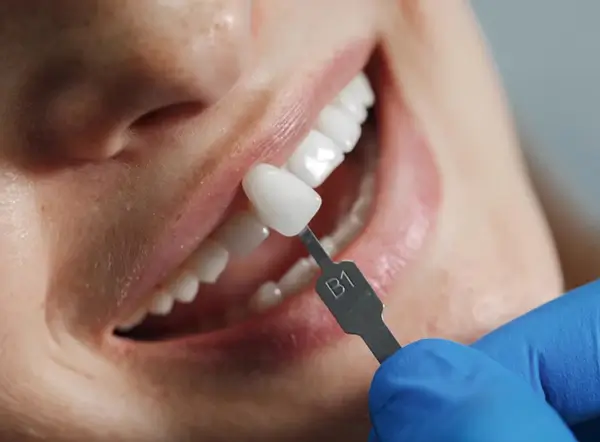
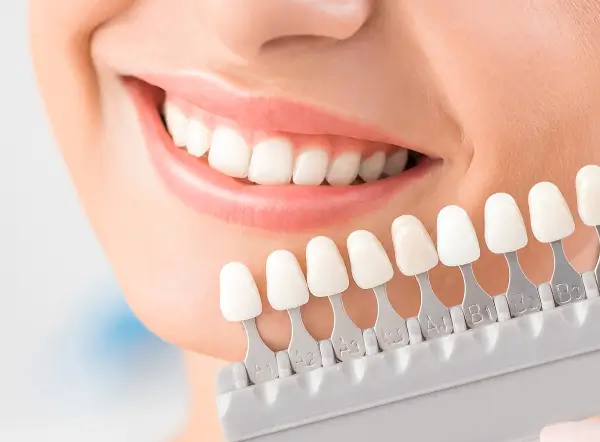
We evaluate your bite, enamel, and facial proportions, then build a trial smile design you can review and adjust. This includes a digital scan and shade evaluation, a smile trial and design approval, and a conservative plan that weighs form and function — not looks alone.
Appointment Two
Prep (or Prepless) & Delivery
Once the design is approved, we prepare the teeth — or skip prep where appropriate — and deliver your final ceramic resin restorations. Fabrication and fit adjustments happen in-house, and final restorations are delivered and refined chairside.
Consultation, smile design, and adjustments are all part of the offer — each step carries a fee that applies directly toward your final treatment cost, so nothing you pay along the way is wasted.
Which Technologies We Use
Patients searching for a “ dentist near me” who can handle design, fabrication, and delivery under one roof are usually looking for exactly this kind of setup.
Material
Ceramic resin, 3D-printed, permanent restorations built for durability and light-matching translucency.
Fabrication
In-house digital lab, so every step of your case stays under our control, not an outside lab’s timeline.
Planning
Digital smile design maps a trial smile before any tooth is touched, so approval comes first.
Experience
1,700+ continuing education hours behind the doctor’s approach to complex cosmetic cases.
Why Choose Us
Plenty of practices offer veneers. Fewer control every step of how they’re designed, built, and delivered.
Design
You approve the smile before we touch a tooth. A trial design phase means the result is agreed on early, not discovered at delivery.
Philosophy
Conservative by default. We weigh function and long-term tooth health alongside aesthetics, not instead of them.
Control
Every step happens in-house, from scan to fabrication to fit.
Expertise
1,700+ hours of continuing education, specifically in cosmetic and restorative case planning.

Why Choose Dr. Loi Ta for This
A veneer case is only as good as the eye and hand behind it. Dr. Ta earned his Doctor of Dental Surgery from the University of Tennessee College of Dentistry, and before he’d even graduated he was presenting oral cancer research at national forums, including the Hinman Student Research Symposium and the American Association for Dental Research. That same early habit of scrutiny still shapes how he plans a smile today.
The learning never stopped there. He has logged over 1,700 hours of continuing education — in esthetics, digital dentistry, full-mouth rehabilitation, and implant surgery — well beyond what licensure requires. It means a veneer plan is never treated as an isolated cosmetic fix, but as one piece of a mouth he understands in full.
Patients also notice the pace: each visit runs like a conversation, not a procedure, with time taken to explain what’s being planned and why. He’s fluent in Vietnamese, Chinese, and English, with Spanish-speaking team members on hand, so the design conversation stays clear no matter which language you’re most comfortable in.
DDS — University of Tennessee College of Dentistry
1,700+ hours of continuing education
Presented oral cancer research at national forums
Fluent in Vietnamese, Chinese, and English; Spanish-speaking team on hand
There’s a personal thread behind the practice, too — its name traces back to his daughter, born in April, the month of the diamond birthstone. The same attention he brings home is the standard he holds at the chair.
Veneers Financing, Without the Guesswork
Cost shouldn’t be the reason a smile plan stalls. We work with third-party veneers financing through Cherry, Sunbit, and CareCredit, so treatment can be scheduled around your budget, not the other way around.
We’ll also walk you through veneer insurance finance options during your consult — what’s typically covered, and how financing partners can spread the remaining cost into manageable monthly payments.



See Your Smile Before You Commit to It
Book your Complimentary Veneer Virtual Smile Consult with Diamond Dental Studio and find out exactly what a custom-designed veneer plan looks like for you.
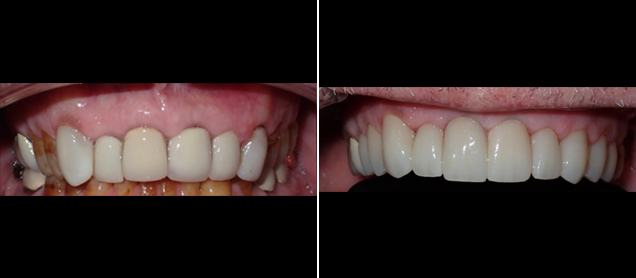
Lateral Teeth Composite Veneers

Upper Crowns/ Veneers
Common Questions
Veneers are typically developed from porcelain or composite resin, both designed to look like natural tooth enamel. We help you choose based on durability, cost, and how natural you want them to look.
Porcelain veneers can last fifteen years or more with good care, while composite veneers usually need replacing sooner, around five to seven years.
Veneers require a minuscule amount of enamel to be removed for a proper fit, but this is a minimal, well-planned process that doesn't harm the tooth's health. We're always conservative with how much we remove.
Traditional veneers involve permanent changes to your enamel, so once placed, you'll need to keep replacing them over time. There are also no-prep veneer options for those who want something less invasive.
Cost depends on the material and number of teeth involved. We provide a full breakdown during your consultation so you can plan accordingly.
Yes, veneers are prevalently used to close small to moderate gaps and create a more even smile line.
Not when they're done well. We carefully match shade, shape, and translucency to your natural teeth so the result looks like your own smile, just improved.
It relies on your goals; some patients only want a few front teeth treated, while others opt for a full set across the smile zone. We'll recommend what makes sense based on what you're trying to achieve.
Yes, once they're bonded in place, you can eat most foods normally, though we recommend avoiding extremely hard items like ice to protect them.
Veneers enhance the visible front surface of a tooth to improve its appearance, whereas crowns completely encase the tooth to strengthen and protect it when significant damage or decay is present.


